Hi, it’s me, back again with another cup of thoughts that bubbled over after seeing one of my favorite brands post a string of kind of insane-looking AI images and thinking to myself, “Please, god, why?????”
I know the siren song of AI image generation is powerful. Type a prompt, and poof! You have a “unique” illustration for your blog post, a “stunning” backdrop for your homepage, or a “professional” headshot without ever putting on a tie.
It can feel innovative and maybe even efficient. (Though, unless you are very good at prompting, it’s probably not saving you much time.) It can even feel like you’re leveraging cutting-edge tech to get ahead! That’s a win! Right?
I’m (sort of) sorry to say that in reality, it’s actually making you look…worse.
And, again, full disclosure, as your friendly neighborhood designer and someone who supports artists and cultural producers, I have some skin in this game.
But I also have eyeballs. And this stuff does not look good!
We’re seeing a flood of AI-generated images across business websites and marketing materials, and the unintended consequences are piling up. While the tech bros want to convince you that these tools are fascinating and going to “kill [insert whatever industry they are going after today here]”, using them as a cheap substitute for real photography and professional design is a strategic mistake.
Why, you ask? Well, buckle up.
The Uncanny Valley of the quality: this stuff just looks weird!!
Seriously, a lot of AI imagery is low quality. It’s trash, and once you know what to look for, the signs are everywhere:
- The nonsensical details: A woman with seven fingers. A clock tower melting into a tree. Logos on shirts that are just warped shapes.
- The soulless, plastic aesthetics: The weirdly smooth, airbrushed skin. The eyes that have no light behind them. The lighting that doesn’t exist in the natural world.
- The homogenized look: These models do not know how to create; they know how to copy, and they are all trained on the same data sets. AI images have a predictable, derivative style. They piss off the originators of the creative they’re based on, and your “unique” image looks exactly like those of anyone else in your niche that is taking the same shortcut.
None of these things signal innovation: they signal a lack of attention to detail. They tell your customer, “We didn’t care enough to get this right.”
The absurdity of it all undermines your credibility
AI is really very bad when it comes to context. You might ask for a “happy diverse team of engineers in a modern office” (please just take an ACTUAL photo of your happy and diverse team!!) and instead get a group of people in lab coats inexplicably high-fiving in a Starlink cafeteria.
When your imagery is absurd or logically inconsistent, it doesn’t only look silly, it actively undermines your credibility. It makes your entire brand feel less trustworthy and less serious. Customers subconsciously ask, “If they cut corners here, where else are they cutting corners?”
Or, in the case of Sketchers, it can create more than a head-scratching moment and actively alienate or offend your audience:
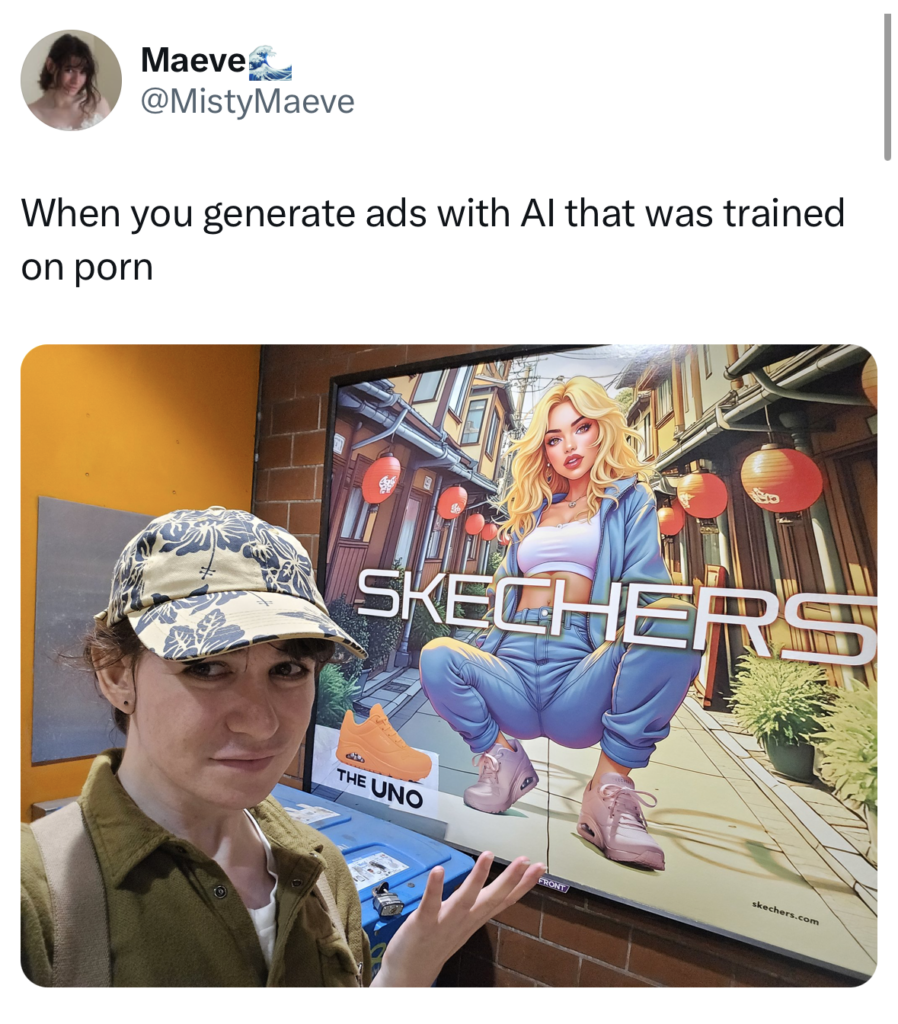
As someone who loved her Sketchers growing up, I know I wasn’t trying to look (and my parents didn’t want me to look) provocative…I wanted to look like I was wearing little clouds on my feet.
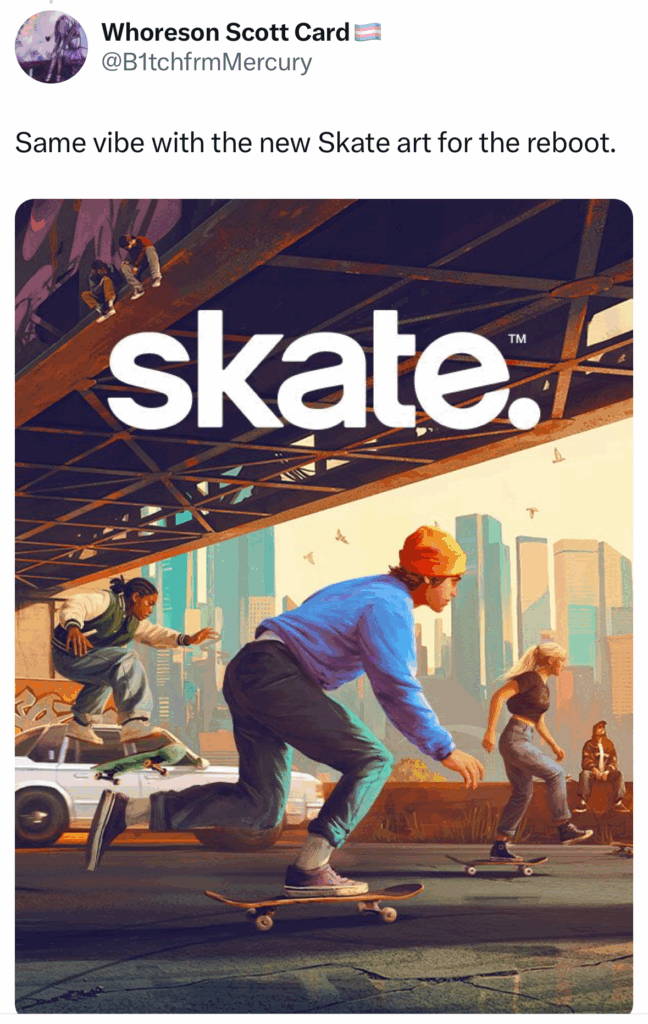
The laziness is telling
This is the most important point, so lean in a bit so you can hear me. Choosing a bizarre, obviously AI-generated image that copies a beloved or famous style, over a simple, authentic photo you already have or can easily take or that exists from a reliable source is a confusing move.
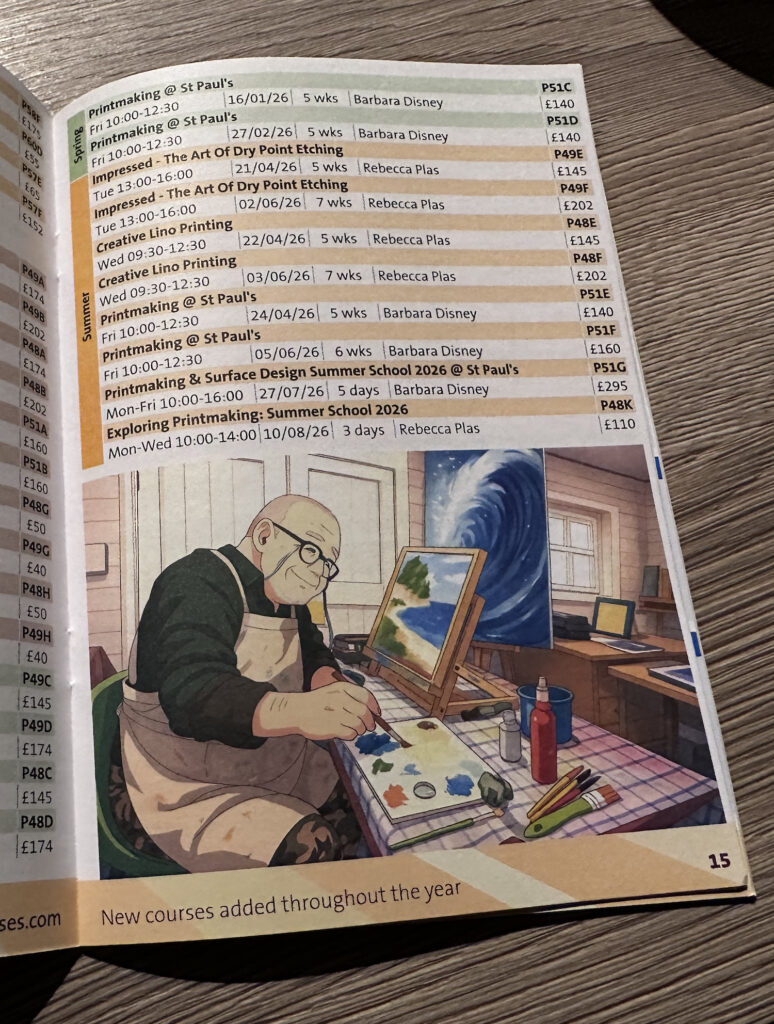
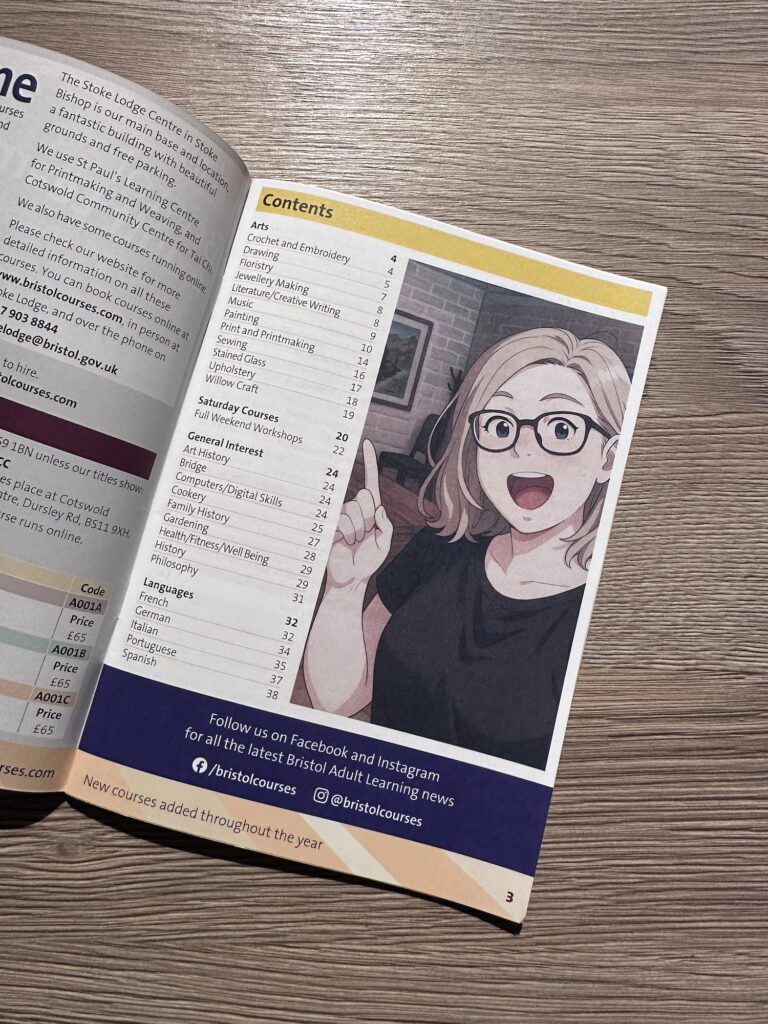
AI-slop juxtaposed with courses to help people make real art is…something.
So, what’s the actual advantage of using AI? Is it enough to use it just because it exists?
Picture it (see what I did there?): You need a photo of a cup of coffee for your café’s Instagram. You could:
- Option A: Take a beautiful, well-lit photo of an actual coffee from your actual café. It’s real, it’s steaming, and it is surrounded by your real ambiance and customers.
- Option B: Spend 20 minutes crafting a prompt to generate a “hyper-realistic photo of a cup of coffee on a wooden table with cinematic lighting,” and end up with something that looks almost real but has a handle that can’t accommodate actual human hands properly.
Option A is authentic. Option B is a performance of authenticity. It screams, “We wanted to look like we have professional photos without actually putting in the minimal effort to take one.” It’s a shortcut that everyone can see and very few people enjoy.
In my view: an imperfect, real photo or illustration beats the slop every single time.
A slightly grainy, genuine photo of your real team laughing together is infinitely more powerful than a “flawless” AI rendering of generic business people. A picture you took on your phone of your actual product in use tells a true story. It tells your story!!
AI can mimic style, but it cannot replicate substance, authenticity, or the tiny imperfections that make your business human.
End of.